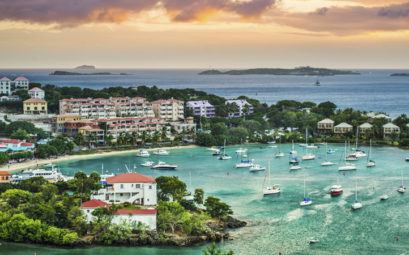
Retirement Planning
for Offshore Living
By Richard Burkart |
.
.
The
advantages of outsourcing your retirement have never been better!
Why not
start a second "dream" career, or simply retire in a low cost, tropical
country with all the conveniences of home?
Spend less than 25% of your present
monthly budget while maintaining or probably enhancing your lifestyle.
Say "goodbye" to your financial planner and her "advice"
that you must accumulate at least $1,000,000 in liquid assets before you
even think about leaving your "day job".
My new book Retirement Planning
for Offshore Living can become your personal guide and roadmap to successful
"offshore living". Use its many detailed spreadsheets to compare and analyze
an optimal country for retirement or a second career haven.
Mike &
Barb Buchan from Pompano Beach, FL wrote: l First, I want to thank you
very much for the book help. the extensive data is great and the amount
of research you've done is incredible. My wife and I will be in Panama
the 1st and 2nd week of April and we will be looking for a place to buy
within the next year. I can't thank you enough for the book help.Thanks
again for all your effort!!!!!
Susan Ball
from Ottawa Canada writes: "This very readable book makes an excellent
case for outsourcing your retirement - but that's not all. Burkart backs
up his convictions with budgetary comparisons and the insight of someone
who has lived there. I was pleased to see some Canadian examples for those
of us living north of the border". (Susan recently purchased an island
lot in Bocas del Toro Panama and is planning to build a residence in the
near future). |
Dear
Reader,
If you happen to be just a tiny bit
concerned about your retirement planning program and achieving your financial
"number", or if you simply wish to review your available retirement options
and long-term retirement risks. then here is an interesting and true story
that will provide some comfort.
My wife and I recently decided to
"gear down" and work more relaxing careers in art and writing.
We will stay busy but we want the
option to take time off whenever we wish to travel or just relax. Of highest
importance we want to ensure our chosen lifestyle for many years with a
comfortable cash flow "cushion" |
| Because of
a number of unfortunate events, we were unable to save the recommended
"million dollars" in liquid assets, excluding our home equity, as suggested
by most financial advisers in North America.
This was due
in large part to a single major investment setback relatively late in our
careers.
Lee Eisenberg's
recent best-seller "The Number" (the amount of money needed before one
should retire) strongly suggests that one may require substantially more
than $1,000,000 to avoid a serious "lifestyle relapse" during the last
third of your life.
In short, a
million bucks ain't what it used to be! |
| How well
did we do financially? |
| To be perfectly frank, not that
well!
In fact, we did not even achieve
HALF the minimum recommended million dollars INCLUDING our home equity.
A failure, that in the view of most financial advisors, would oblige most
couples to hold down part-time jobs well into their 80's and even beyond.
The standard prognosis for a "long
and happy" retirement with such meager assets in North America or Europe
is definitely NOT encouraging particularly if one happens to aspire to
a "millionaire" lifestyle (whatever that may mean for you).
The much advertised, "start late
finish rich" strategy, did not work very well for us either. "Late" and
"finish" are such highly subjective terms they became meaningless concepts.
It was clear to me that if we chose
to retire in North America or in Europe, we would not have to worry much
about "dying broke" as suggested by author Stephen Pollan in a book of
the same name, our main problem would be "living broke".
We were never "fully vested" in a
corporate or government pension plan which can be boon for poor savers.
Neither did we have the potential of a significant inheritance income.
We would be entirely dependent on
government social security checks (both American and Canadian), any investment
returns on our savings, hopefully some rental income, and then any second
career income. Everyone knows that writers and painters are filthy rich! |
As a development economist and international
pharmaceutical consultant, we had the opportunity to reside in and visit
many countries from Canada, the USA, Thailand, France, Singapore, the UK,
Mexico, Switzerland, etc.
On three occasions, we thought we
had finally found our perfect "retirement haven" in Boca Raton FL, then
Kata Beach Thailand, and finally in Puerto Vallarta Mexico. Each time we
were disappointed for various reasons and made the decision to move on
and keep looking.
In retrospect, it was definitely
not that easy to find exactly what we were looking for! Hence this book
"Retirement Planning for Offshore Living" |
Our "fatal
flaw" was that we both enjoyed the proverbial "good life".
-
We
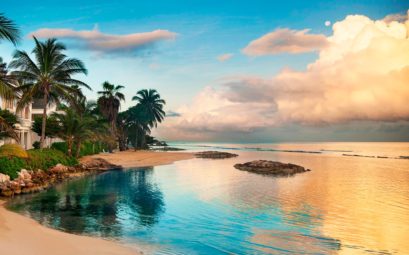
have always wished to live on or near a sandy beach fringed by swaying
palm trees with a warm swimmable ocean and views even.
-
We enjoy dining
at "linen-cloth", gourmet restaurants several times per week even though
Lise is a great chef.
-
As
a teenager, I loved golf and finally shot to a 10 handicap. However, in
the urban centers where I had to live for my work, golf was outrageously
priced at private clubs and the public courses were too packed for a pleasant
game.
-
I absolutely must
have the latest computer technology and software. I cannot survive without
high speed DSL internet, cable TV, and inexpensive, high quality phone
systems.
-
I
also thrive in a "highly entrepreneurial" environment where one can experiment
with new business ideas without endless "red tape".
-
Although in good
health, we demand quick and inexpensive access to top quality medical facilities
with English speaking doctors. We need ready access to the latest brand
name pharmaceuticals and high quality, low cost health insurance which
is renewable forever.
-
We
want a practical and affordable solution to the high risk of "assisted
living" at some later time. Plans to organize a co-housing project remain
high on our agenda.
-
We found we could
not tolerate living without potable tap water.
-
Friendly
people in a tolerant and democratic society are one of the most critical
factors for our long-term happiness.
Finally, we
love to entertain friends at home on a regular basis. This desire requires
access to good friends and reasonable prices.
|
| Retirement Planning
for Offshore Living |
|
|
.
In
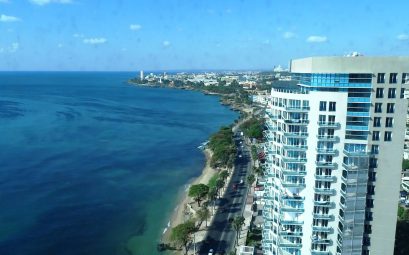
the spring of 2005, we purchased an almost new, fully furnished, 4 bedroom,
4 bathroom, modern house on a half acre of land right beside the Pacific
Ocean.
Our home is situated a mere 400 feet
from an outstanding, sandy swimming beach guarded by swaying palm trees
and bougainvillea.
This country is NOT located in North
America but is still less than a five hour and $500 round trip, direct
flight from New York City.
Our new home is in a "gated resort
community" comprising about 600 to 700 residences including a number of
well-designed condominium properties and ocean mansions.
This "resort" golf and country club
community was planned and constructed 50 years ago as a weekend retreat
for wealthy local families.
This tropical country is not impacted
by hurricanes, earthquakes or other natural disasters.
We could have chosen, for the same
price, a beautiful home in a cooler, pristine mountain resort community
only 25 minutes from the beach. The soaring dramatic peaks are clearly
visible from our property.
On the weekends and during high season,
"our beach" buzzes with gaggles of teenagers, surfers, lazing sunbathers
and frolicking children with picnicking families.
In April 2006, the world famous Tim
Curran (winner of several world surfing titles) was surfing on our little
beach. He gave a free lesson to a good Canadian friend of mine who happened
to be staying at our house for the month.
Incidentally, my friend just purchased
a 180 meter (about 1900 square feet) condo in Panama City for investment
purposes for the grand price of $125,000.
In less than two months, in the summer
2005, which happens to be low season, we made more good friends in this
small resort community than we have in the past five years in New Jersey.
Our new friends are mostly Americans
and Canadians but also many locals.
Several friends hail from Ottawa
which was our previous home in Canada. Each month there is an "expat night"
or a "special social event" such as a fashion show. Depending on the time
of year, as many as 140 people turn up at a local restaurant which is a
mere 2 miles from our house.
Making friends could not be easier.
These are "expats" and NOT tourists.
At night, we hear the occasional
gecko as well as what I call "stereophonic wave sounds". Our house happens
to be located on a small spit of land that is almost, but not quite, a
"peninsula" (which makes the surfing excellent). As a Zen Buddhist might
ask ... what is the sound of two shores lapping ....
In the morning, we are awakened by
the inevitable rooster calls followed by chattering parrots. At first,
the rooster calls were a bit much but one adjusts quite quickly. |
Because real estate is such a major
decision area for a move offshore, most people are happy to get as much
information as might be available on this subject.
My book "Retirement Planning for
Offshore Living" gives you all of the details and then some.
There were three detached buildings
on our property when we purchased it. In addition to our main 1300 square
foot, 4 bedroom home, we have a bright and airy 480 square foot, fully
finished, tiled, air conditioned, "family room" with a modern two piece
vanity. This was used as a "party room" by the former owners.
We will convert this studio into
a "one bedroom guest house" for our friends and possibly for extra income
in high season and for holidays. We plan to add a small 8' x 12' private
swimming pool to this unit with a large ceramic terrace and privacy walls
with plantings.
The third building is only 350 square
feet in size. It was designed as a self-contained "maid's quarters". We
attached a small "tool shed" to this "casita" for storage of garden implements
and pool supplies.
The combined size of the three buildings
is about 2100 square feet. Two of the buildings have "central air" and
all buildings are in excellent condition.
Upon taking possession, we built
a 15' x 22' swimming pool fully lined with ceramic tile for ease of cleaning.
It includes three curved, walk-down steps, a submerged "massage bed" serviced
by several Jacuzzi jets, an underwater light, and a "fountain jet" for
"white noise" if required.
I will tell you the total cost to
build this pool later .... |
| Property
Visuals and Curb Appeal |
The main property is completely enclosed
by a 6 foot high, whitewashed, cement block, privacy wall. The arched gate
leads to our 5000 square foot "back orchard". It will also be enhanced
and developed when we move permanently later this year (2006).
One enters the property through an
ornate wrought iron gate which is the preferred style in this community.
Our half-acre of land is flat without
rocks. On purchase, it contained landscaped lawns, mature flowering shrubs,
many tree orchids, four or five coconut palm trees, and several fruiting
trees.
There is a huge "papaya mango" tree
which yields hundreds if not thousands of delicious mangoes for our voracious
"smoothie" blender. |
| Yet Only
60 Minutes to a "First World" City |
Our ocean resort community is
a one hour drive (less than 50 miles), on a well maintained four lane highway,
to a modern, dynamic city. If something is not for sale here, it probably
does not exist anywhere in the world.
The city skyline comprises about
150 modern commercial and residential skyscrapers of 40-60 stories with
another 30 similar projects rising from the ground. A building boom is
in clear evidence.
Most importantly, the city is populated
by one million extremely friendly people. This was one of our most important
factors for an offshore decision!
Many city shops offer "world class"
goods. You can buy the latest "designer labels" from Paris or Milan in
exclusive boutiques. You can visit the new 1,000,000 square foot shopping
center comprising 200+ stores, restaurants and cinemas.
"Global goods" such as automobiles
and electronic items have the same prices as in North America. Perhaps
the latest electronic goods are 5% more expensive than in the USA. Otherwise
most prices are substantially lower than in North America or Europe.
In this "first world" city, there
are four excellent hospitals with English speaking and North American or
European trained doctors. A brand new, state-of-the-art "John's Hopkins"
hospital just opened in early 2006.
Medical tourism is now a dynamic
industry. |
| For example:
A triple heart bypass that costs
about $125,000 in the USA, will cost you $14,000 here in a private hospital
room. This is about half of your "standard 20% co-pay" in the USA.
A stent procedure in the USA that costs $50,000 will
run about $10,000 here
A dental "crown" costing $700-1200
in the USA and $350-600 with a standard co-pay, costs $125-150 here.
As one might expect, excellent health insurance is
available for expats at a price much lower than in the USA, Canada or Europe
where you pay through higher marginal tax rates.
Many expats simply choose to
"self-insure" themselves and put their insurance savings in a high yielding,
tax free offshore mutual fund for a rainy day.
The cost to visit an English speaking doctor at the
local clinic, 2 miles from our home, costs USD$5 cash. Our "clinic" is
open 7 days a week and the doctor will spend 15 to 20 minutes with you
or more if required and discuss more than one medical problem per visit.
Try that in New Jersey! If you need a blood test the cost is either $5
or $10 depending on which day you go. In NJ it is $300 to $400.
All of the latest proprietary
and generic drugs are available at two local pharmacies (one is open 24x7).
They cost 25-40% less than in the USA.
Many standard pharmaceutical products are available
without a doctor's prescription such as antibiotics
The tap water is potable in
most towns and cities, including our little resort community.
|
| "Our Millionaire
Neighbors" |
On the "ocean side" of our street,
there are perhaps 75-100 elegant mansions that would be priced anywhere
from $7,000,000 to $30,000,000 in the Santa Barbara or San Diego coastal
areas of California and perhaps 50% less along the eastern seaboard.
There are 5 or 6 high quality, high-rise
condominiums in this resort community. The unit sizes range from 1000 to
7000 square feet. Virtually all have gorgeous ocean views and easy access
to the beach plus a large social area with swimming pool.
A brand new "ultra-modern", 64 unit
luxury condominium project will "break ground" this summer (2006). 60%
of the units have been "pre-sold" with 30% deposits, mostly to expats.
This project, called "El Alcazar",
and will enhance the "profile" and property values of our entire community.
The average sized unit is 3000 square feet with incredible views of the
Pacific Ocean, the golf course, and the surrounding mountains.
There are several two story penthouses
available with 7000 square feet. Lower floor units are priced at about
$300,000. The project is located in the center of the golf club. On completion
this project will be easily visible from our house. |
| Our Four
Star "Golf and Country Club" |
| But wait, as they say, there's
more .... our new "offshore lifestyle" includes full membership in a high
quality, four star, Golf and Country Club with major Equestrian facilities.
In fact, our property backs onto
an 18-hole, "Tom Fazio", PGA Golf and Country Club. The air conditioned,
equestrian facilities feature a "performance stadium" and a high quality
restaurant for weekly special events.
You might have noted that Donald
Trump engaged the same Mr. Tom Fazio to design his two luxury golf courses
located in the states of New York and Florida.
Speaking of Donald Trump, he is planning
to construct the largest casino in Latin America only one hour from our
house. Units apparently went on sale in April 2006. His first little venture
"offshore" so to speak.
Our golf club includes four wonderful
restaurants (two of which are top quality), a small discothèque,
an elegant European spa, a well stocked "pro shop", a supervised children's
play area, and four tennis courts for night playing.
There
is the "Olympic-sized" swimming pool at the main Club House plus a spectacular
"infinity pool" right on the beach served by a smaller "snack" restaurant
and bar. We can walk to either of these "club pools" from our house in
about 5 minutes.
By owning a home in this resort community,
the "initiation fee" for full club membership, is waived. Our monthly "maintenance
fee" will be about $145 after an additional discount available to pensioned
expats. |
| An Affordable,
Sustainable Lifestyle? |
| Absolutely yes!
We paid a total of $136,000 for our
original property fully furnished, including all closing costs. By the
way, we paid the full "asking price" which is totally out of character
for me.
The annual taxes on our property
are $123 or $10.25 per month. In comparison, our rather modest, 4 bedroom
house in New Jersey, has a 2006 municipal tax bill of $6300 per annum,
or $525 per month, and it is rising more rapidly than inflation.
On possession of our 5 year old house,
we spent an additional $15,000 on some enhancements including a new swimming
pool, privacy walls, etc. The property is now in first class condition.
Our total out-of-pocket costs are $151,000. We were immediately able to
rent the property for 6 months for $1200 per month. Our property management
costs are $100 per month.
For the same amount of money in the
"City", we could have purchased a 6-7 year old, three bedroom, 3.5 bath
room, 1800 square foot well-designed condo with separate maid's quarters,
on the 15th floor of a high rise apartment building, overlooking the Pacific
Ocean in the best part of town with NO municipal taxes for 13 years. Everyone
gets a 20 year tax exemption on a new property. In this building there
were only two units per floor so we would have had a 180 degree view. The
unit came with two garage parking spots plus a large social area with pool,
exercise room, party room, security guards etc. The monthly condo fee was
$215.
But, we preferred the beach ..... |
| Retirement
Planning for Offshore Living |
|
|
.
| The Cost
of "Home Improvements" |
In
New Jersey, I am always cautious when engaging a "trades person" for house
repair work.
I recently hired an electrician in
NJ for a minor electrical problem in the panel. He and his "apprentice
helper" took 40 minutes to fix the problem and charged $240. No materials
required.
In 2003, a plumber completed several
small repairs on my NJ house which took 6 hours of work. He worked alone
and charged me $1850. In this case, he used $200 of his own materials.
Amazing! A good painter or carpenter in NJ runs about $40+ per hour. This
same service runs $400 per day in Manhattan.
During the summer of 2005, I engaged
and managed 10 skilled construction workers for two months. They worked
a total of 3000 hours and cost me $7,000 for the labor component only.
They used up about $8000 of materials.
This same amount of work would have
cost me at least $125,000 in New Jersey (and much more in California) because
there were many plumbing, electrical and other skilled tasks involved.
My non-English speaking, construction
"team" enhanced our property enormously. They installed, flawlessly I might
add, and to the highest standards, our 15' x 22' ceramic-lined swimming
pool.
The total cost of the pool was just
less than $5,000 including everything (all materials, pumps, filters, excavation,
labor etc.).
A similar New Jersey pool would cost
$35-40,000 and in sunny California it would run in excess of $60,000. |
| In 2006, we are planning to construct
a second house at the rear of our rather long half-acre property just beside
the new pool.
This would become our "primary" home
and comprise 1350 square feet (under air). The house would have another
500-800 square feet of shaded terrace right up to the swimming pool. It
would be integrated with our pool and include a "studio" for Lise. I would
use the present poolside "casita" as my office.
In this manner, we can rent out the
original 4 bedroom house on a long term basis and still maintain our complete
privacy at the rear of the property. We will construct a second, smaller
swimming pool in front of the original house.
The expected construction cost for
our new pool home (about 1350 square feet) is $30,000 or about $22 per
square foot. This budget is based on detailed knowledge of current material
costs and labor rates. I have also been a "small-time" real estate developer
for the past 30 years in my spare time.
The costs to convert the existing
"studio" into a one-bedroom, "guest house" with private pool will be another
$6,000. The budget to improve the existing 4 bedroom house with a private
pool and a closed/screened balcony will also be $6,000.
The total budget to complete everything
is $42,000 and the time to complete will be about 4-5 months. |
| "Fair
Market Value" on Completion |
| The best way to calculate "fair
market value" is to imagine that the entire property is rented out at fair
market rents... even though this is not our intention. Then apply an appropriate
"capitalization rate" which accounts for perceived risks, long term interest
rate levels and perhaps alternate investment opportunities.
The "fair market rent" for the two
larger houses, each with private swimming pools and of course fully furnished,
would be $1300 per month or about $31,000 per annum at the end of 2006.
The smaller guest house, also with a private 8' x 12' pool and privacy
walls, should rent easily for $650 per month for a grand total of about
$39,000. These are rather conservative numbers.
These rental rates are also based
on "long term" annual or at least 6 month rates with full property management
services plus a reasonable vacancy rate. More aggressive short term rental
practices would gross higher dollars but require more active management.
Our estimated net income from the
entire property, if rented in this manner, would be about $34,000.
On a worst case basis using a "cap
rate" of 8% (about three times the current average American rate), the
property would have a fair market value of $400,000 representing a tax
free, "capital gain" of about $200,000 earned in just 18 months of ownership.
Using a more reasonable "cap rate"
of say 5%, which is still twice the "average" for North America and Europe,
the fair market value of the property would be in the $675,000 range.
The long term (30 year) mortgage
rates in this particular country are identical to those available in North
America indicating considerable economic stability. |
Notice that for an "additional investment"
of $42,000, we can create a long term "passive income flow", from two rental
units, fully protected against inflation, of about $1600 per month ...
net net net ..after taxes and expenses.
Remember that the "average" American
Social Security payment is only $1000 after a lifetime of work. At death,
about 50% or this payment is available to the surviving spouse. On the
demise of the surviving spouse, there is nothing left "for the kids".
In contrast, our rental income and
the underlying assets continue forever. |
| How can
$42,000 equal $1,600,000? |
| There may be an even more interesting
way of analyzing the value of our $42,000 investment. This may be of interest
to any Eisenberg fans out there who are worried about achieving their "Number"
in this lifetime.
If today you deposited $1,000,000
into a long term "annuity" (or Certificate of Deposit) in the USA, you
would earn approximately $50,000 per annum at existing 5% rates.
After paying average US taxes of
say 25% on these earnings, you would have $37,500 left. After making provision
for inflation, at say 2.5%, or $25,000, you would have $1000 per month
left of "net spendable" cash. If you spend more than this amount, you start
to erode your capital base which is not a great idea when you may live
a lot longer than you expect.
In contrast, our little $42,000 property
investment creates two new rental income streams while we continue to live
in our private "pool house" with an orchard as a back yard. Of course we
already own the property although we did not buy the property with this
option in mind.
Our $1600 per month of "net spendable"
cash flow is protected against inflation because we can raise our rental
rates to match inflation. Furthermore, the property has an excellent chance
of increasing in value over time for additional capital gains most of which
are not taxable.
Our new "income stream", generated
from the $42,000 investment, produces a "net spendable income" equal that
of a $1,600,000 annuity or CD (Certificate of Deposit). |
| Retirement Planning
for Offshore Living |
|
|
.
| Our New
Budget and Lifestyle |
| Our expected
annual living expenses, in our new country and new home by the pool, with
our vastly improved "lifestyle, will be $18,400 without any debts.
This budget
is one third of our current New Jersey budget where our standard of living
is much lower. In NJ we eat out in fewer fancy restaurants, we do not have
a beach house or a private country club membership. We do much less entertaining.
We do not have an in-ground pool on our tiny, albeit standard, 4000 square
foot lot.
At our new offshore
home we can (and do) engage a gardener for $10 a day, one day a week, to
clean the swimming pool and manicure the property.
We live within
2 miles of a clean, modern food market that is open 24x7 where huge juicy
pineapples cost less than $1.00. Top quality rib-eye steak is priced at
$2.25 per pound; delicious sea bass costs $1.25 per pound. Three large
avocadoes set you back $1.00. Bananas are 5 cents each.
I refuse to
tell you about the low cost of the excellent imported wines and hard alcohol!
One should not
be surprised that health insurance costs are also about 33% of American
or Canadian rates (considering the higher marginal tax rates that apply
in Canada).
In summary,
one dollar spent in our new tropical paradise buys three times as much
as it would in the USA considering an average basket of goods and services.
Without any
financial planning, we instantly created a "triple cushion" on our required
"number". Not bad .....
Incidentally,
the official currency used in this country is the American dollar which
makes keeping track of costs a lot easier. |
| Our "Millionaire
Lifestyle" |
In New Jersey or Florida, this "offshore
lifestyle" would clearly be considered that of a "millionaire". In California,
this is a slam dunk "multi-millionaire lifestyle".
Just buying a house within one or
two blocks of the ocean along the "Jersey Shores", in Southern Florida
or anywhere along the Pacific Coastal Highway in California would set you
back $2-5,000,000. Your municipal taxes and insurance alone would exceed
our annual cost of living.
Such properties in the US are typically
next to a busy highway with awkward beach access to water that is too cold
for swimming at least 5 months a year (and sometimes all year) and is often
relatively polluted.
A modest 650 square foot condo in
downtown Carlsbad, one block to the beach at Lincoln and Pine has an asking
price of $800 per square foot. This unit does not have ocean views, there
is no swimming pool, and "floating" floors transmit sound to the unit below.
The ocean water temperature as of May 1 was 60 degrees. |
| The Inevitable
Tax "Bite" |
| One thing I forgot to mention
... the tax regime!
All income that you earn outside
of this particular tropical country is potentially "tax free" although
it is "reportable" to the tax authorities.
-
If you happen to be a Canadian or a
European this means "tax free" for unlimited offshore earnings from any
source.
-
If you are an American, and you have
lived outside the USA for 330 days in a "calendar year" then you and your
spouse may quality for an IRS annual exemption of approximately $80,000
each on income earned through regular salaries. This does not apply to
"passive" or investment incomes.
|
| Our tropical country has some
of the most generous residency conditions in the world for pensioners although
there are many other countries with easy residency conditions as well.
To obtain "Pensionado Status" you
must be 18 years of age or older.
You require proof of an "after tax"
pension income of USD$500 per month plus $100 per dependent.
Different rules apply for investor
visas and other visa types but they are all very generous.
A clean criminal and health record
are needed.
Your legal and application costs
for residency will be in the $1500 to $2000 range for a couple.
You have the option of purchasing
a 5 year Certificate of Deposit at the Central Bank sufficient to generate
$750 per month and obtain residency for your family in this manner. |
| Specific
Benefits of a "Pensionado" Visa |
-
You
can reside permanently in the country.
-
On moving, you
will receive an Import Tax exemption for personal household goods up to
$10,000.
-
You
have an Import Tax exemption for a new car, for personal use, every two
years
-
You can purchase
tickets for the cinema, sport events and entertainment at a 50% discount
-
You
can enjoy public transportation for 30% less on buses, trains and boats
and less 25% for internal travel on airlines.
-
You can stay at
hotels for 50% less from Monday through Thursday and less 30% from Friday
to Sunday
-
Your
restaurant meals will be discounted by 25%
-
Fast food restaurant
meals are discounted by 15%
-
Visits
and services received at hospitals and clinics are discounted 15%
-
Medical prescriptions
and most medical services and special consultations are discounted from
10% to 20%.
-
The
mortgage rate on your personal residence is reduced by 1 percentage point.
-
Your monthly electric
bill, up to 600 kwh, enjoys a 25% discount.
-
Your
water bill is reduced by 25%.
Although very attractive,
these discounts should NOT become the main reason you choose to move but
they certainly make life more enjoyable and serve to significantly stretch
the purchasing power of your "fixed income".
Other
Visa Options
$200,000 invested
in a home, registered in your own name, can also provide you with a permanent
resident visa as a "person of means".
My book "Retirement
Planning for Offshore Living" explains many other visa options. |
| Is this
a Mythical Country? |
| Absolutely not!
The country just described happens
to be Panama as you have have already guessed.
I wish to go on record that there
are many other "low cost developing" countries in the world that offer
some very interesting incentives as well.
Many of these countries have lower
costs of living than Panama. You could probably live very well on perhaps
10-15% of your current budget in Ecuador, Uruguay, Argentina, Thailand,
or Nicaragua. You can often purchase substantial houses in such countries
for $25,000 to $50,000.
The Escape Artist, AARP, Fortune
Magazine, and many others have written very favorably about Panama. Panama
was chosen as the "best country in the world" to live and retire by International
Living... five times in a row.
If "offshore living" is in your contingency
plans, then the main problem is to identify the best or optimal country
for your desired lifestyle, second career or retirement home. |
| What could
I Learn from this Book? |
|
"Retirement
Planning for Offshore Living" provides you with a solid "framework" and
"reference" to compare one country with another as well as developed countries
with developing countries.
It
shows you how to dramatically enhance your present lifestyle on one third
of your current budget.
It
contrasts the many retirement advantages and disadvantages of living in
developed countries such as the USA, Canada, the UK, France, Singapore
etc with specific developing countries such as Thailand, Mexico, and Panama.
It
provides you with a proven "road map" and a "plan of action" for checking
out your retirement alternatives to an expensive and high risk retirement
in a developed country (e.g. the USA, Canada or Europe).
You
will discover important details about purchasing real estate, day-to-day
living, investing, working, and retirement opportunities.
There
is a significant section outlining a wide range of small businesses that
you could easily start in such a country with much less capital and fewer
risks than in North America or Europe.
|
| Why should
I Purchase this Book? |
-
This book will
help you to make a sound judgment concerning the advantages of offshore
living and retirement.
-
The
full range of retirement issues are reviewed in a long term perspective
with a focus on financial and medical risks that could lead to a "lifestyle
relapse" as you live longer than expected.
-
It directly addresses
the long-term financial risk of "assisted living" in a developed country
and provides a sensible alternative.
-
It
will save you a considerable time and money by helping you avoid common
"mistakes" that the author has already made.
-
It provides you
with a valuable "standard of measure" and a "checklist" so that you can
quickly determine and compare the most optimal retirement locations for
your particular needs and interests.
-
It
will permit you to better understand the risks and advantages of retiring
or downsizing in a developed country.
-
It will introduce
you to the various types of small business opportunities that could be
successful in such a country and the advantages you would have in a second
career.
The
price is only $24.95 for the e-book version with 248 pp at 8.5"x11" for
easy home printing including about 60 color photographs and some video
clips.
Act today! |
| Retirement Planning
for Offshore Living
|
|