No Lift, No Rain
The Caribbean's volcanic islands manufacture their own weather. Trade winds hit the peaks of Dominica or St Lucia, rise, cool, and wring out several metres of rain a year on the windward slopes. Flat limestone islands have no such mechanism. The Bahamas, much of Barbados and Antigua, and much of the Turks and Caicos are low-lying, and the same trade wind that drenches the Pitons simply passes over them. Orographic rainfall — rain forced from moisture-laden air by a ridge — requires a ridge. Without one, annual precipitation drops sharply, aquifers are thin, and whatever freshwater exists in the rock is vulnerable to saline intrusion as sea level rises.
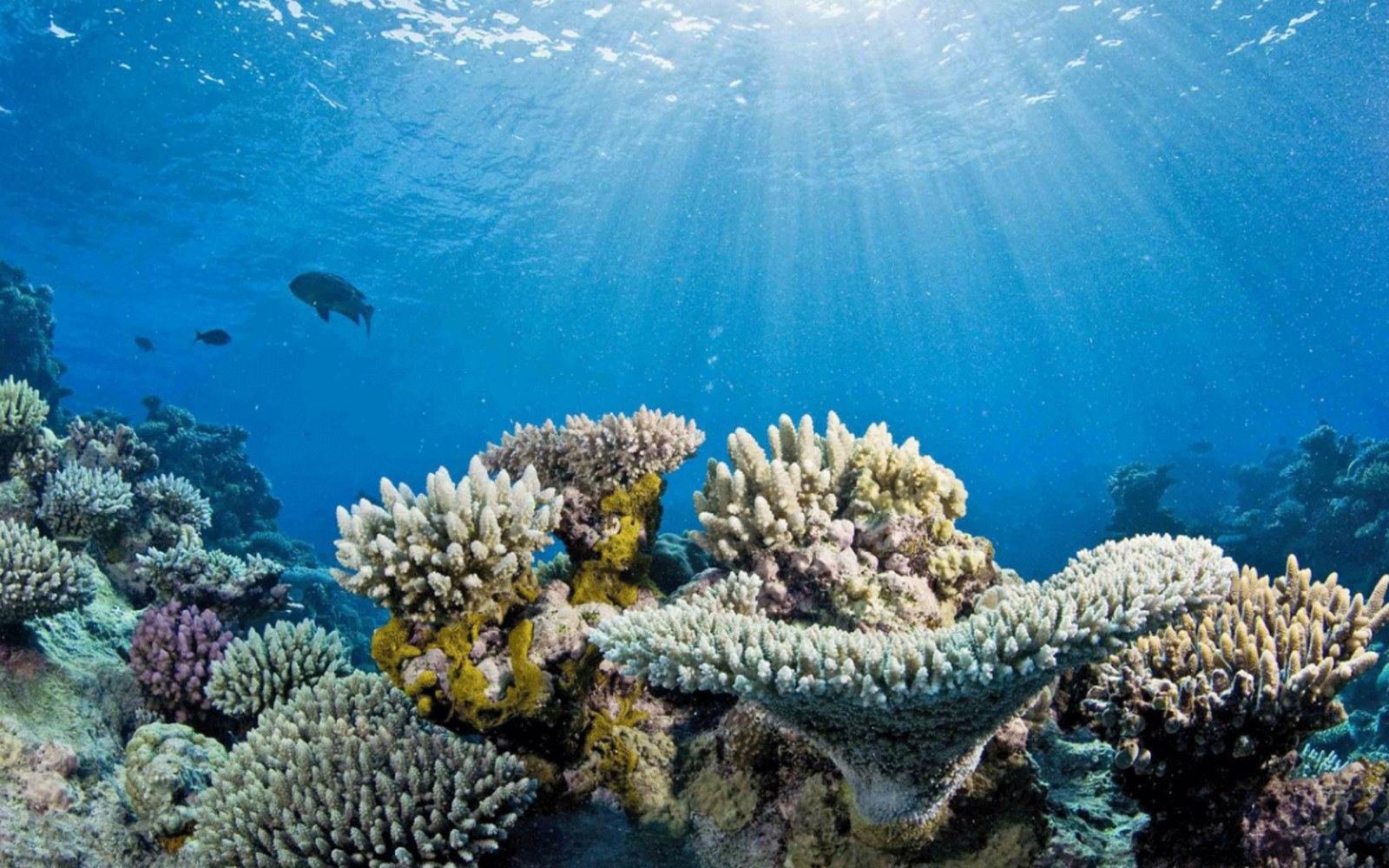
Barbados is the clearest case on a carbonate platform. The island's coral limestone acts as a sponge — rainwater percolates down into lenses that float, under gravity's logic, atop denser saltwater. Pump too hard, and seawater migrates inland. The island has managed its Scotland District springs and its limestone aquifer carefully for generations, but management only goes so far. Population density, seasonal tourist load, and declining rainfall trends linked to a warming Atlantic have all pressed against the limits of what the rock can hold.
Desalination as Infrastructure
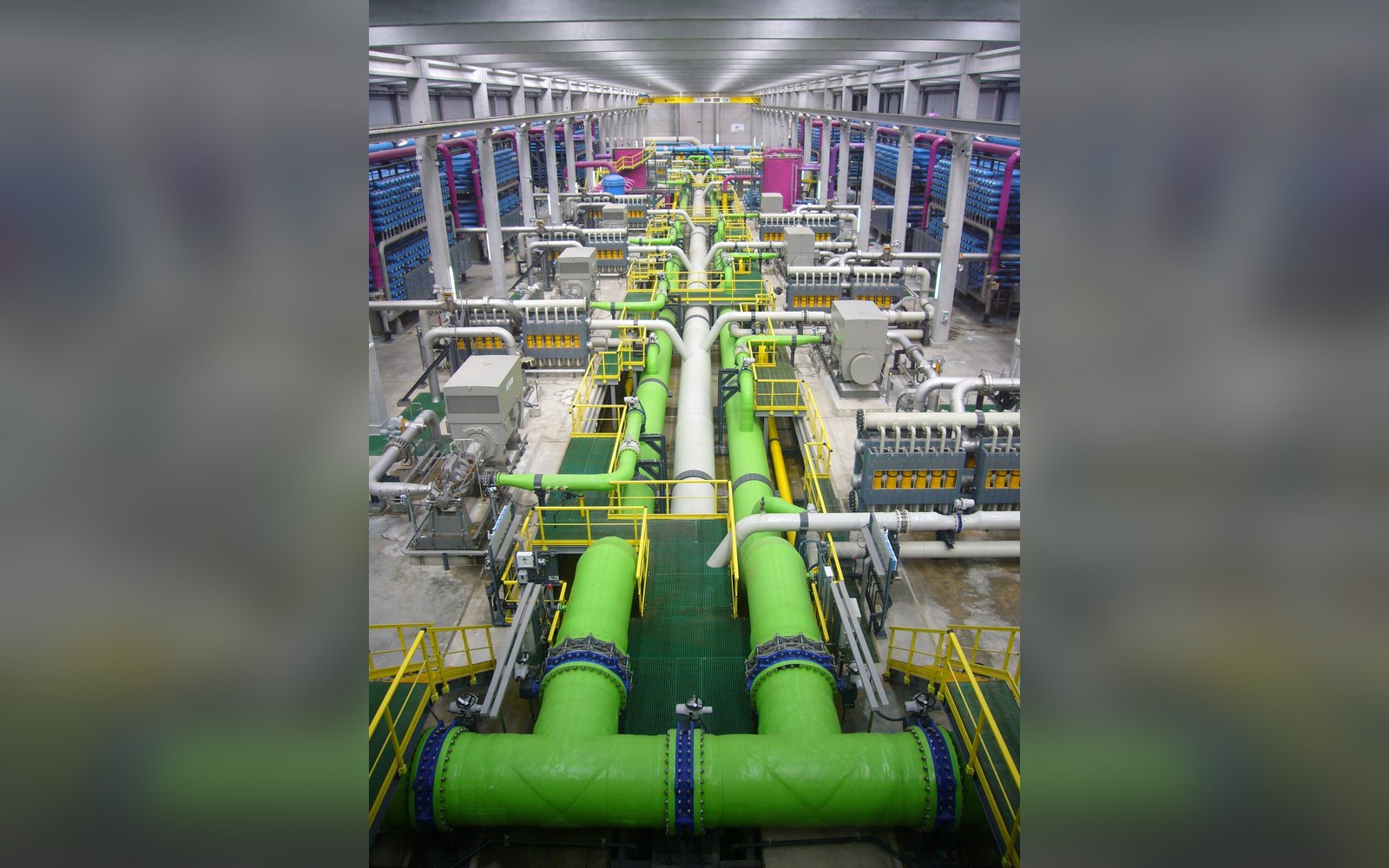
The practical answer, across most low-lying islands, is desalination: forcing seawater under high pressure through membranes fine enough to reject dissolved salts, a process called reverse osmosis. The Bahamas and Antigua both run reverse-osmosis plants as primary rather than supplemental supply. Aruba, a dry limestone outlier near the Venezuelan coast, has operated large-scale desalination since the 1930s and now draws virtually all its municipal water from the sea.
This is not free. Reverse osmosis is energy-intensive — membranes must sustain continuous high pressure, and the concentrated brine reject must be managed so it doesn't damage nearshore marine habitat. The electricity bill is embedded directly in the water tariff, which is embedded in everything else: the cost of a meal, a hotel room, a bag of concrete mix, a hospital stay. On islands without significant hydrocarbon resources of their own — and most flat carbonate islands have none — that electricity comes from imported diesel. The supply chain runs: oil tanker, fuel depot, power station, desalination plant, pipe. Each link adds a margin and a point of failure.
The contrast with Trinidad is stark. Trinidad's economy runs on natural gas, and cheap domestic energy has historically suppressed utility costs across the board. A limestone island importing diesel to run desalination is paying multiple times over for the same glass of water.
What This Means for Everything Else
Water scarcity shapes economic possibility in ways that compound. Agriculture on low-relief limestone islands was always constrained — sugarcane on Barbados was sustained partly by the island's relatively better rainfall compared with drier neighbours, but even there the plantation economy leaned hard on the soil until it was exhausted. Today, growing food commercially at scale on a water-scarce island requires either irrigation from desalinated water (expensive) or total dependence on imports. Most flat islands have chosen the latter, which keeps them exposed to shipping disruptions and global commodity prices simultaneously.
The institutional response has been regional rather than island-by-island. CARICOM has long identified food and water security as linked vulnerabilities, though coordination on shared infrastructure remains difficult when each member state controls its own utility sector. The Eastern Caribbean Central Bank, whose currency peg to the US dollar keeps exchange rates stable for its eight member states, cannot insulate those states from import costs — it can only make the price transparent and predictable rather than erratic.
What the peg does do is remove one variable from a supply chain already full of them. When diesel arrives on a tanker, at least the island knows exactly what its currency is worth when the invoice comes due. On a flat island with no mountains and no rivers, certainty of that limited kind is not nothing.