The Atlantic Belt That Changed
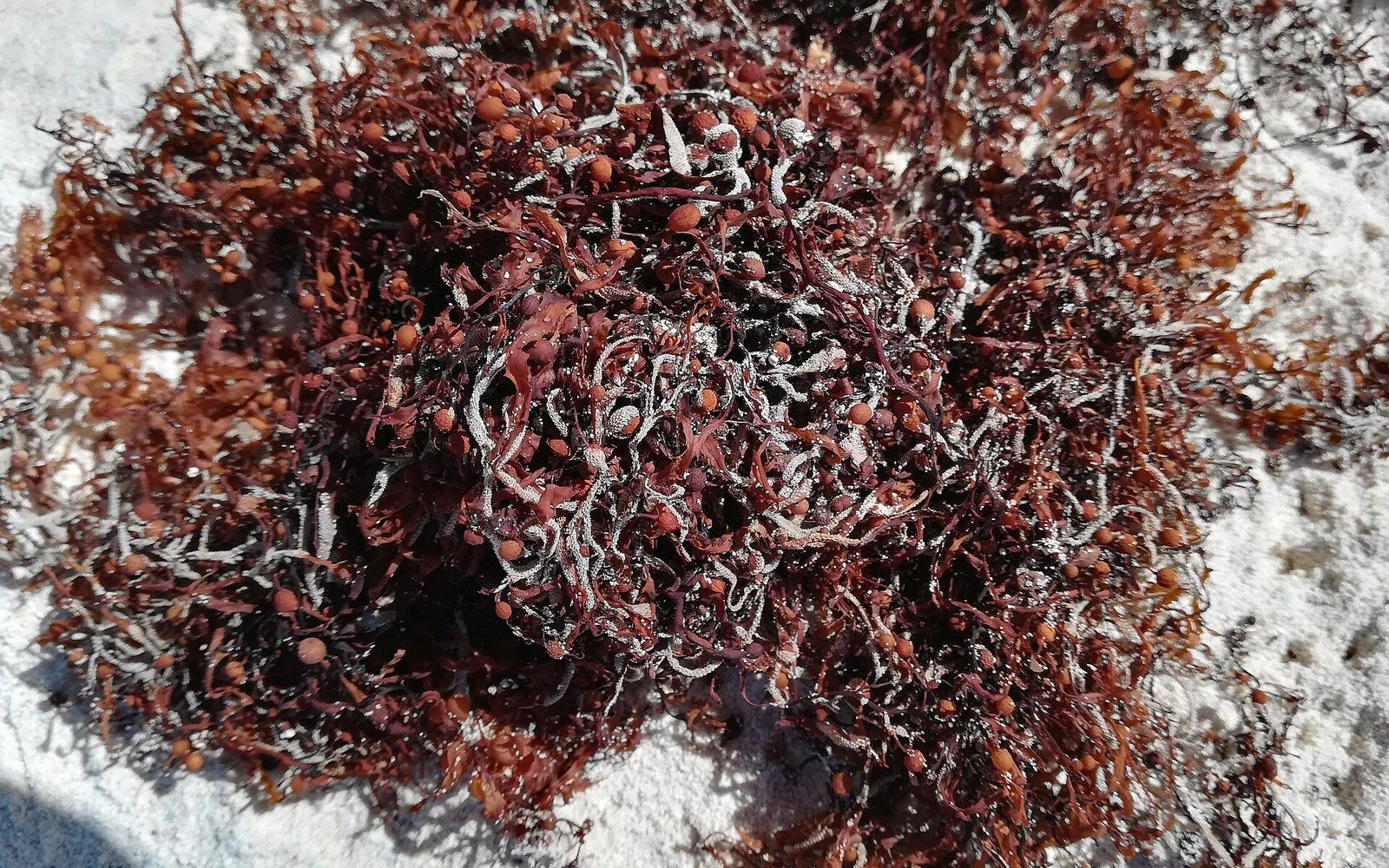
Sargassum is a free-floating brown macroalgae that has always existed in the Atlantic. The Sargasso Sea, the famously calm gyre east of Bermuda, held its name precisely because of these mats of weed — noted by European sailors as far back as the fifteenth century, and part of the open-ocean ecosystem ever since. Juvenile sea turtles shelter beneath floating clumps; fish spawn and feed in its shade; it serves as nursery and refuge for dozens of species. For most of Caribbean history, what arrived on beaches amounted to modest seasonal wrack, the ordinary debris of a living sea.
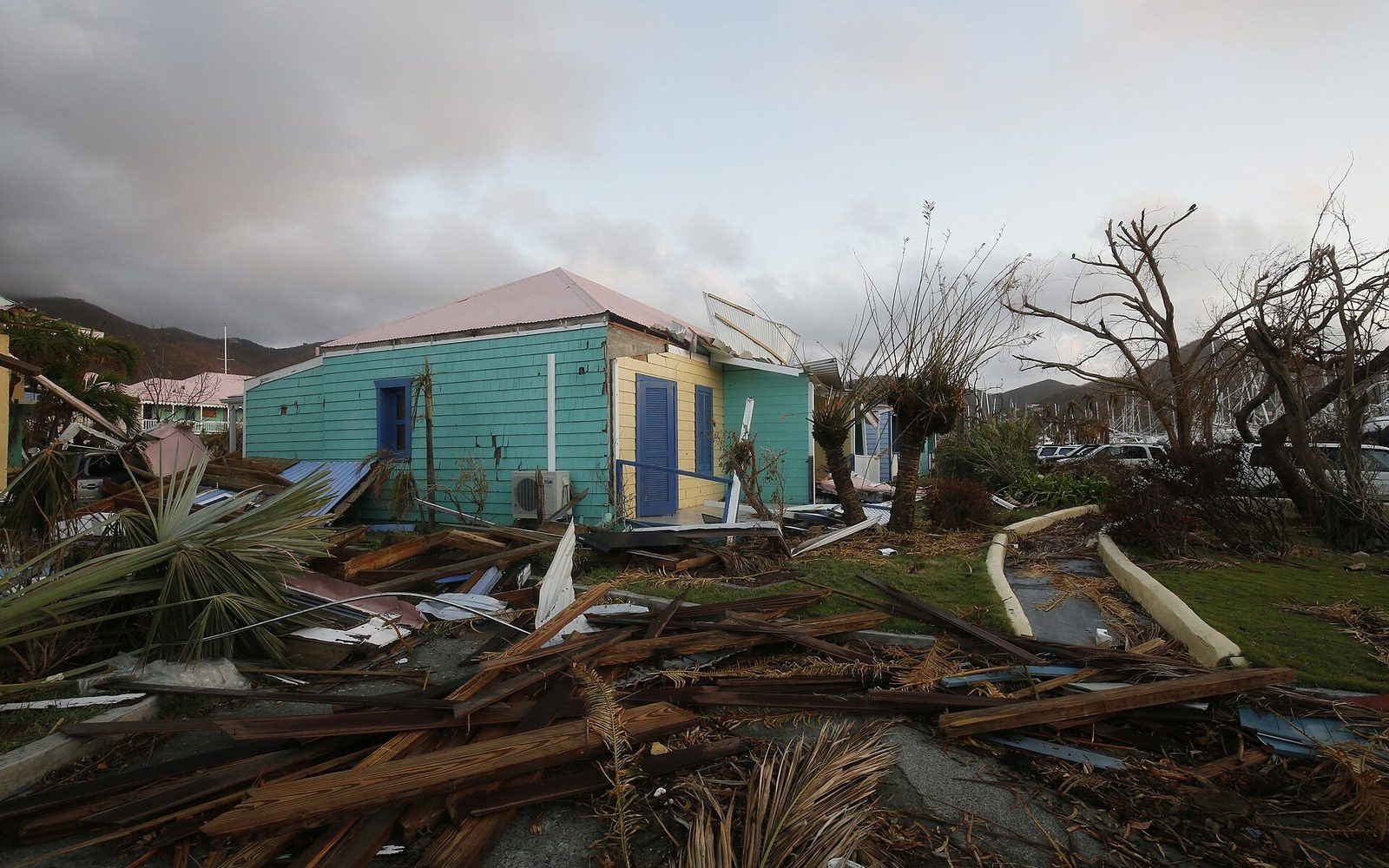
June to November, and the numbers are counted — The Atlantic season runs June to November with a documented climatology, and Hurricane Maria in 2017 remains the reference event for the eastern islands.
Damage to buildings caused by Hurricane Irma in Nanny Cay on the British Virgin Island of Tortola. The Caribbean island suffered widespread damage and destruction when Hurricane Irma passed over on 6 September 2017. · Wikimedia Commons
That baseline broke around 2011. Satellite imagery and coastal monitoring documented the emergence of a new and enormous accumulation zone in the equatorial Atlantic, roughly between West Africa and the Caribbean, quite separate from the classical Sargasso concentration. Researchers at the University of South Florida, analysing twenty years of satellite data, found that by 2018 this equatorial belt — which they named the Great Atlantic Sargassum Belt — stretched intermittently across thousands of kilometres and in peak months held more than twenty million tonnes of biomass. The 2018 bloom was the largest ever recorded. There has been no return to pre-2011 conditions.
What caused the shift is a combination of factors acting on the same nutrient system simultaneously. Increased discharge from the Amazon and Congo rivers, carrying agricultural runoff rich in nitrogen and phosphorus, feeds the algae at a scale that historical river chemistry did not. Sea-surface temperature anomalies in the equatorial Atlantic, consistent with the broader warming trend, extend the growing season and support reproduction. Trade winds and Atlantic currents then carry the accumulated mats westward, along the arc of the Lesser Antilles, into the Caribbean Sea, and northward along the Gulf of Mexico coast. The system is not triggered by any single hurricane season or El Niño event; it has shown up every year since 2011, heavier in some years than others but never absent.
What Arrives on Shore
The weed itself is not toxic in open water. The problem is decomposition. When sargassum piles on a beach in masses — sometimes reaching depths of a metre or more, in berms stretching along entire coastlines — it begins to rot in the tropical heat within days. The bacterial breakdown of organic matter releases hydrogen sulfide, the gas responsible for the characteristic rotten-egg smell that has become a recurring feature of eastern Caribbean shore communities each spring and summer. Hydrogen sulfide at high concentrations is an irritant to eyes and respiratory systems, and the odour alone is enough to empty a beach of visitors.
Juvenile sea turtles shelter beneath floating clumps; fish spawn and feed in its shade; it serves as nursery and refuge for dozens of species.
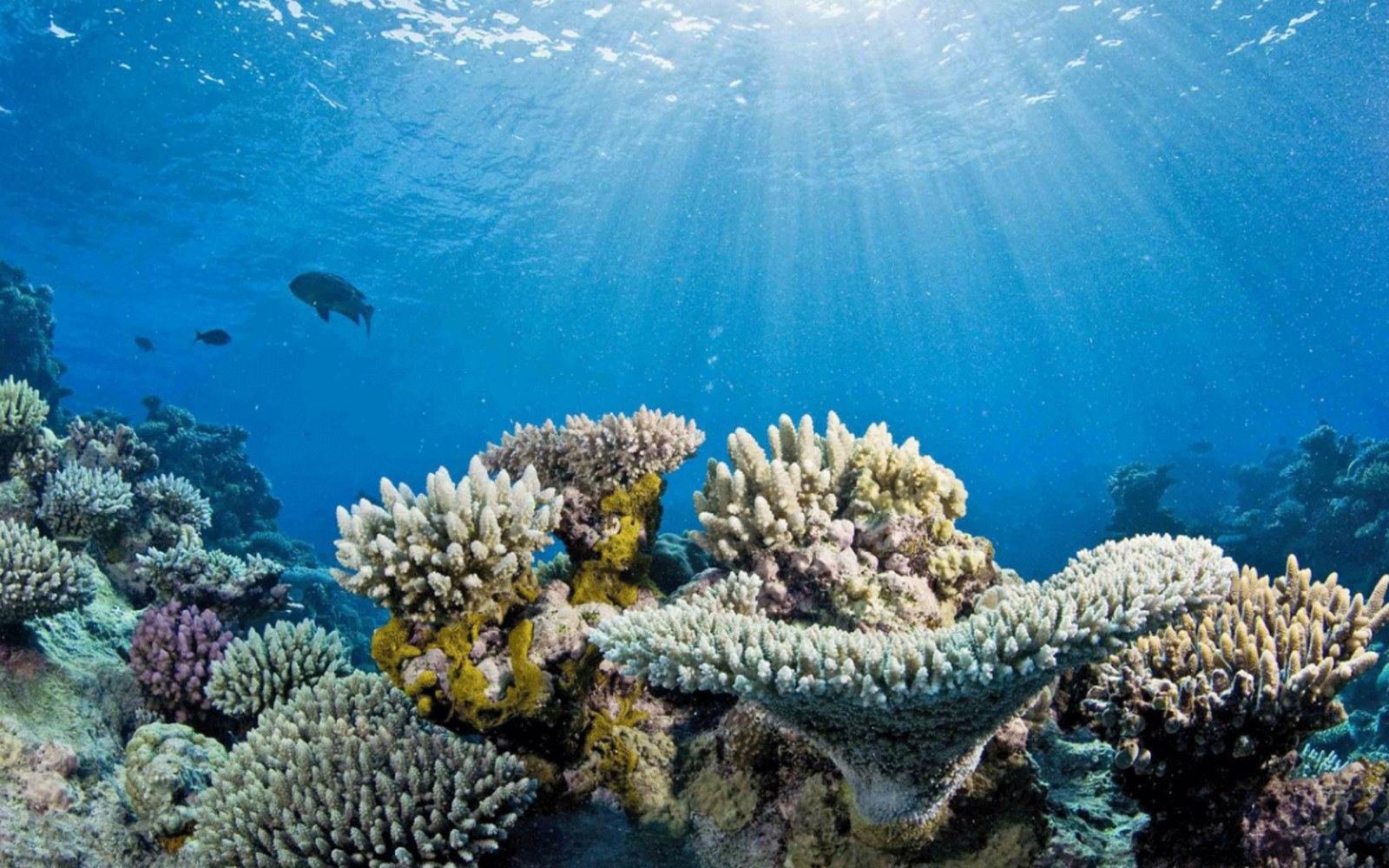
The ecological damage is layered. Sargassum in large quantities smothers seagrass beds, blocking sunlight; decomposing mats reduce oxygen in shallow water, creating hypoxic conditions that stress nearshore fish and invertebrates. Sea turtle nesting is disrupted when females cannot reach sand, and hatchlings that emerge through accumulated weed may fail to reach the sea. Coral reefs immediately inshore of heavy deposition suffer shading and nutrient loading simultaneously. The same reefs already stressed by bleaching events tied to sea-surface temperature anomalies bear the additional burden of sargassum-driven shade and chemical change.
For fishing communities, the immediate practical problem is gear. Sargassum clogs nets and propellers, fouls fish traps and lines, and makes launching boats from beach ramps hazardous. Small-scale fishers — still the dominant mode of inshore fishing across most of the Lesser Antilles — have reported losing workable days to the weed, with no compensation mechanism in place. The cost is diffuse and poorly counted, absorbed by households rather than by any institution.
The Beach Economy Calculation
The Caribbean's dominant post-plantation economy is tourism, and tourism is overwhelmingly oriented toward coastline. The arrival of sargassum at scale therefore hits the sector's core product directly. Barbados, St Lucia, Guadeloupe, Martinique, and the windward coasts of Trinidad and Tobago have all recorded significant inundation events; the eastern-facing shores of the Greater Antilles — Puerto Rico and the Dominican Republic — have been regularly affected too. Islands with a predominantly eastern exposure have little shelter from the prevailing current paths.
Hotel and villa operators in affected zones have responded by employing manual removal crews — a cost that falls on the property rather than being absorbed collectively — and by deploying floating booms offshore in an attempt to deflect incoming mats before they beach. Boom systems have shown limited effectiveness against the volumes that arrive in peak months; a mat large enough to be visible from orbit does not stop at a line of floats. Beach cleaning operations themselves raise secondary questions: mechanical raking removes sand along with weed, altering beach profiles over repeated seasons, while manual raking is labour-intensive and often insufficient in heavy years.
The economic accounting is genuinely difficult. Tourism revenue is the aggregate of many private transactions, and the causal link between a bad sargassum season and a measurable drop in arrivals is hard to isolate from other variables — exchange rates, airlift, competing destinations. What is documented is the behavioural response: visitor reviews and cancellation patterns correlate with media coverage of heavy influxes, and eastern Caribbean tourism boards have had to manage perception damage in source markets during peak bloom years.
What the Region Has Built in Response
Institutional response has been more deliberate than is sometimes reported. The Caribbean Regional Fisheries Mechanism and individual island governments have funded monitoring networks that track sargassum density using satellite feeds and report forecasts to coastal managers in advance of major influxes. CARICOM has acknowledged the issue within its climate-adaptation frameworks, though coordinated regional spending on mitigation has remained modest relative to the scale of the problem.
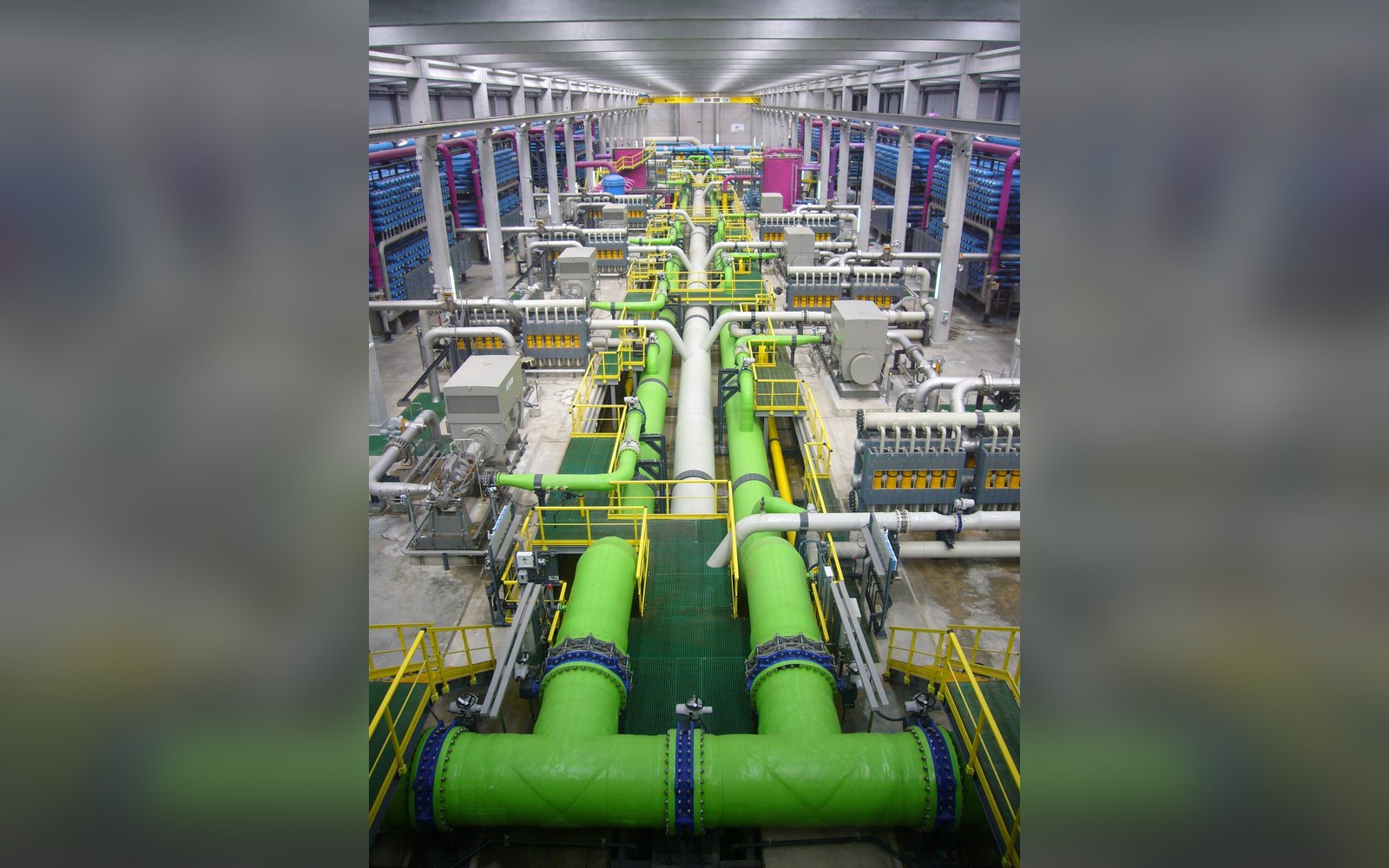
Flat islands import theirs — Limestone islands with no relief get little orographic rain and run on desalination, which sets the price of everything else.
Reverse osmosis desalination plant · Wikimedia Commons
Research into commercial use of beached sargassum has attracted interest as a potential way to convert the nuisance into a resource. Proposals range from fertiliser and animal feed — the weed is rich in minerals when fresh — to biogas generation and construction materials. The difficulty is that fresh sargassum must be processed quickly before it produces gases, requires desalination of its high salt content for most agricultural applications, and arrives in unpredictable quantities on coasts without the industrial infrastructure to handle rapid throughput. Several pilot schemes have been attempted in Barbados, Martinique and elsewhere; none has yet scaled to the point where commercial uptake meaningfully reduces beach accumulation.
The more durable observation is structural. Sargassum influxes represent a regional problem generated by forces — Atlantic nutrient loading, sea-surface warming — that no Caribbean government controls and no Caribbean institution can reverse. What islands can manage is the response time, the removal capacity and the diversification of coastal economies enough that no single bad sargassum month collapses a community's income. That resilience work is happening unevenly across the archipelago, as it always has.