The plantation as population engine
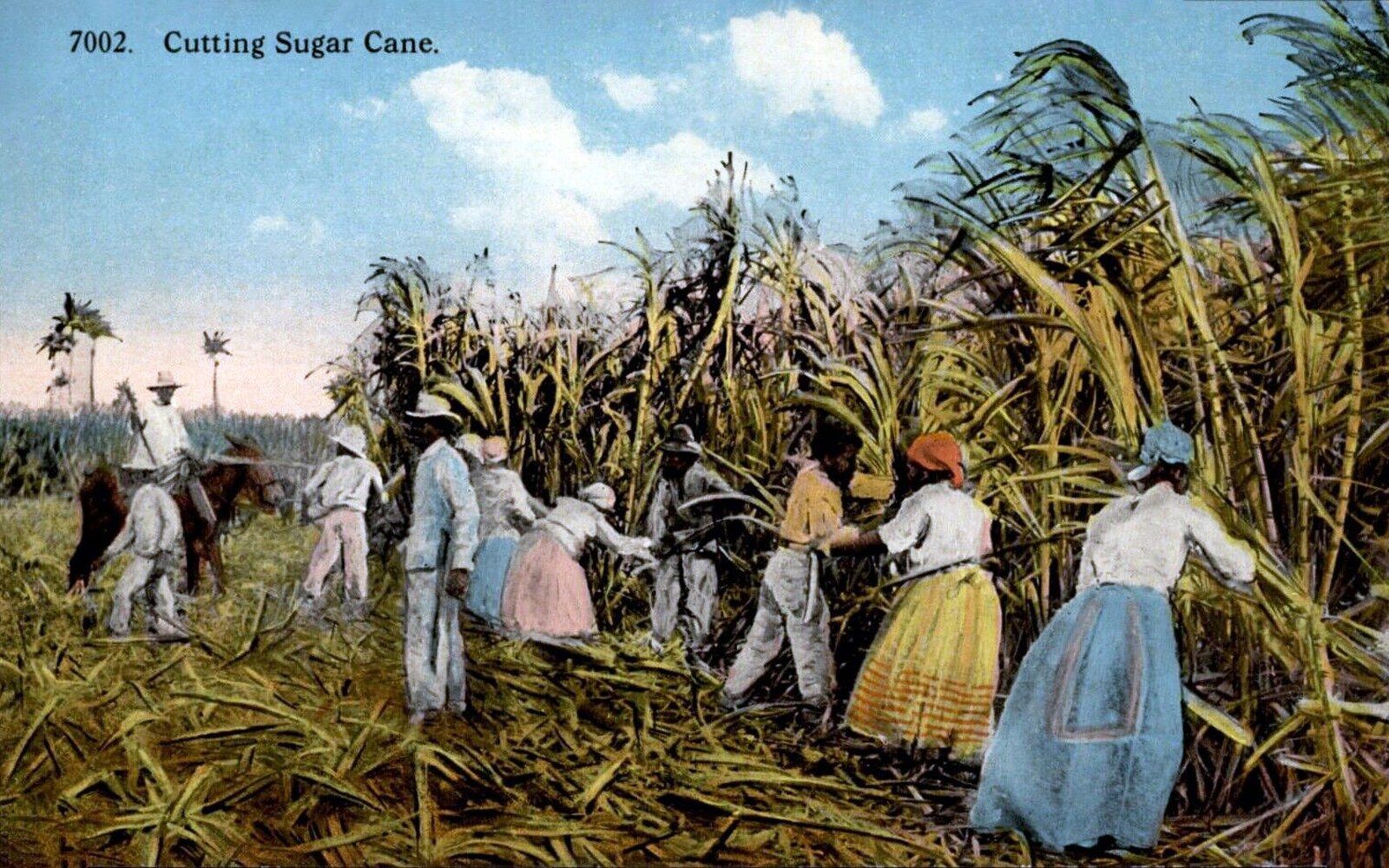
Before sugar, the European presence in most Caribbean islands was thin and opportunistic: a few hundred settlers growing tobacco or cotton, trading hides, looking for gold that was rarely there. Sugar changed the arithmetic completely. The crop demanded extraordinary quantities of labour at every stage — clearing forest, planting ratoons, cutting cane within days of ripeness, feeding the mill, boiling the juice through successive stages in copper coppers — and it demanded that labour in a tropical climate that proved fatal to Europeans at a rate that made indentured white workers an unreliable supply. The answer the planters reached for, and which colonial governments enabled, was the Atlantic slave trade: the forced transportation of millions of people from West and Central Africa to the island colonies. The numbers were not incidental. They were calibrated to the productive requirements of the estate.
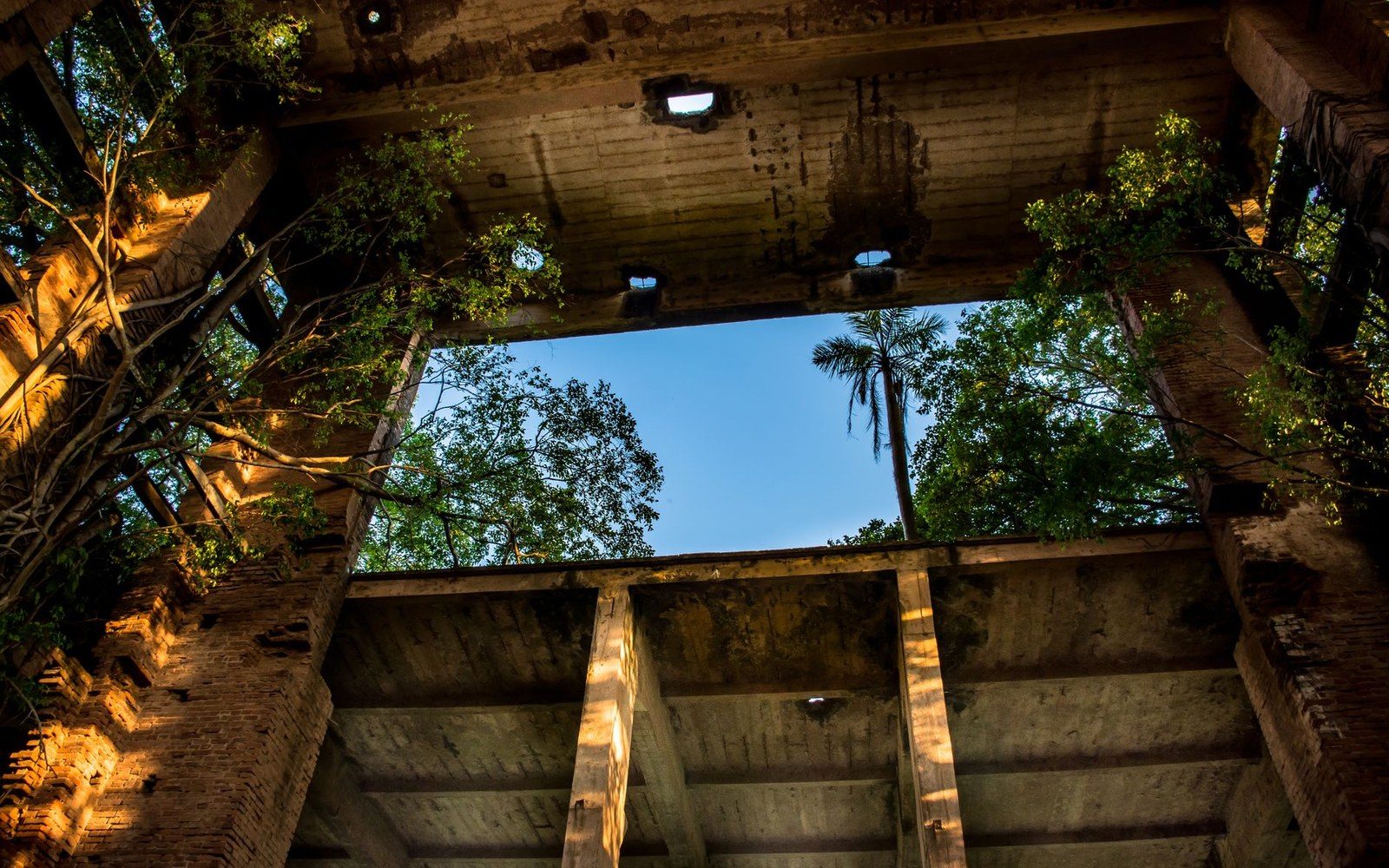
What replaces an export monoculture — Tourism, offshore services and remittances took the place of agriculture unevenly, and the islands that had mountains had more options.
Joana Vittoria / Pexels
The scale of that transfer is documented in the Trans-Atlantic Slave Trade Database, which records individual voyages and their documented human cargoes. By the time the British trade was abolished in 1807 — the trade, not yet slavery itself — roughly a million enslaved people had been landed in Jamaica alone, and Barbados, which at its peak in the late seventeenth century was the most productive sugar colony in the British empire, had received hundreds of thousands more. The French islands tell a comparable story: Saint-Domingue (the western part of Hispaniola, now Haiti) was processing more sugar than all the British colonies combined by the 1780s, sustained by an enslaved population that was replaced faster than it could reproduce itself, because it was cheaper to buy another person than to allow the conditions that might sustain a family. Saint-Domingue's revolution of 1791–1804 ended that particular calculus and produced the region's first Black republic, but it did not undo the demographic structure the plantation had installed.
What sugar installed, in every island that ran on it, was a strongly African-descended majority beneath a thin white planter class, with a middle layer of free coloured people whose legal status varied by colony and year. The ratio of enslaved Africans to Europeans was sometimes ten or twelve to one on the intensively planted islands. Barbados, almost entirely devoted to cane and with little interior to retreat into, had one of the highest ratios in the British Caribbean. That island's geography reinforced the plantation's grip: flat, wind-exposed, without the forested highlands that allowed escaped communities — Maroons — to survive in Jamaica's interior or in the mountains of Hispaniola. The landscape and the crop together produced distinct social geographies that are still legible in the present.
Indenture, the second recruitment
Emancipation in the British colonies — formally complete in 1838, after a four-year apprenticeship period — did not end the plantation. It ended the legal compulsion. Formerly enslaved people used their freedom to move off the estates wherever they could: into peasant cultivation in Jamaica's interior, into the towns, into the professions where those were accessible. The planters, facing labour shortages they were unwilling to remedy by raising wages, lobbied successfully for a second phase of recruitment: indentured labour from India, and in smaller numbers from China and from other parts of the colonial empire.
Before sugar, the European presence in most Caribbean islands was thin and opportunistic: a few hundred settlers growing tobacco or cotton, trading hides, looking for gold that was rarely there.
Between 1838 and 1917, roughly half a million people came from the Indian subcontinent to the British Caribbean under indenture contracts that obligated years of estate labour in exchange for passage and a small wage. The distribution was not even. Trinidad, with large uncultivated estates and a politically powerful planter lobby, received a very large share: somewhere over 140,000 people across the full indenture period, a figure that reshaped the island's entire social character. Guyana (then British Guiana) received more still, over 230,000, and the sugar belt of that country's coastal plain remains majority Indo-Guyanese to this day. Jamaica and Barbados received far fewer, because the formerly enslaved population there was larger relative to available land, and the planters' leverage over government was somewhat weaker.
The consequence was layered populations in the same colony, each attached in different ways to the estate economy, and each navigating emancipation and post-emancipation society from a different starting point. In Trinidad the bifurcation between Afro-Trinidadian and Indo-Trinidadian communities became structural: different patterns of land ownership, religious practice, political affiliation and economic sector. Carnival and steelpan are primarily Afro-Trinidadian traditions; the rice-and-cane farming belt in the central and south of the island is where the Indo-Trinidadian presence is densest. Those patterns are the direct legacy of who was recruited for what purpose and when.
Reading the present map
The modern demography of the Caribbean makes very little sense without this history. The contrast between Barbados, overwhelmingly African-descended, and Trinidad, roughly forty percent each Afro-Trinidadian and Indo-Trinidadian with a mixed and minority remainder, is not cultural accident. It is a record of two different labour regimes: one that ended at emancipation, and one that was added afterward, and it tracks precisely which islands had the political economy that made indenture worthwhile.
The islands that were marginal to sugar — Dominica, which was mountainous and fought over so long that its plantation economy never fully consolidated, or the Bahamas, which sat on carbonate banks too thin for cane — have population histories shaped by different forces, smaller scales, and different proportions. The islands that did support sugar — Barbados, St Kitts, Antigua — are African-Caribbean in their majorities. The outlier is Trinidad, which also runs on hydrocarbons now rather than cane, but whose demographic structure was set by the planters' response to emancipation three generations before oil arrived.
Sugar is no longer the economic driver of any major Caribbean territory. Barbados officially decommissioned its last sugar factory in 2024. But the plantation's decisions about who to bring, in what numbers, from where, and under what legal conditions remain the dominant fact of Caribbean demography. The crop is gone; the population map it drew is not.