What Pitch Lake Actually Is
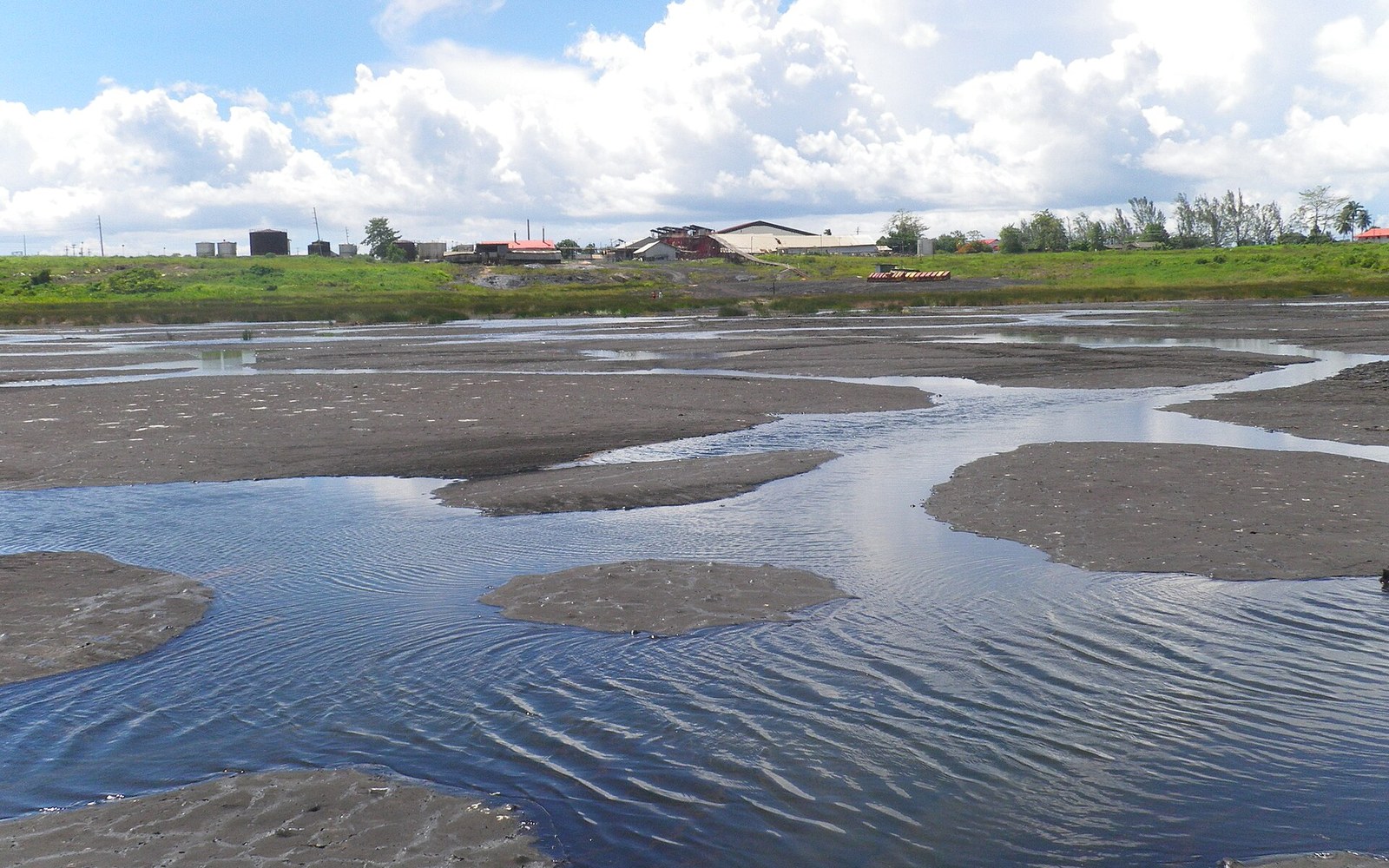
La Brea's Pitch Lake covers roughly 40 hectares on the Trinidadian coastal plain and reaches depths of around 75 metres at its centre. It is not a lake in any conventional sense but a surface expression of a much deeper geological phenomenon: crude oil migrating upward through faults in the earth, losing its lighter hydrocarbon fractions as it nears the surface and leaving behind a dense, semi-solid bitumen that pools and self-renews from below. Trinidad sits at the complex boundary between the Caribbean and South American tectonic plates, and the same structural geology that makes the island an oil producer — the source rocks, the faults, the migration pathways — is what feeds the lake. The deposit is essentially a slow, continuous seep that has been exposed at the surface long enough to become a significant topographic feature.
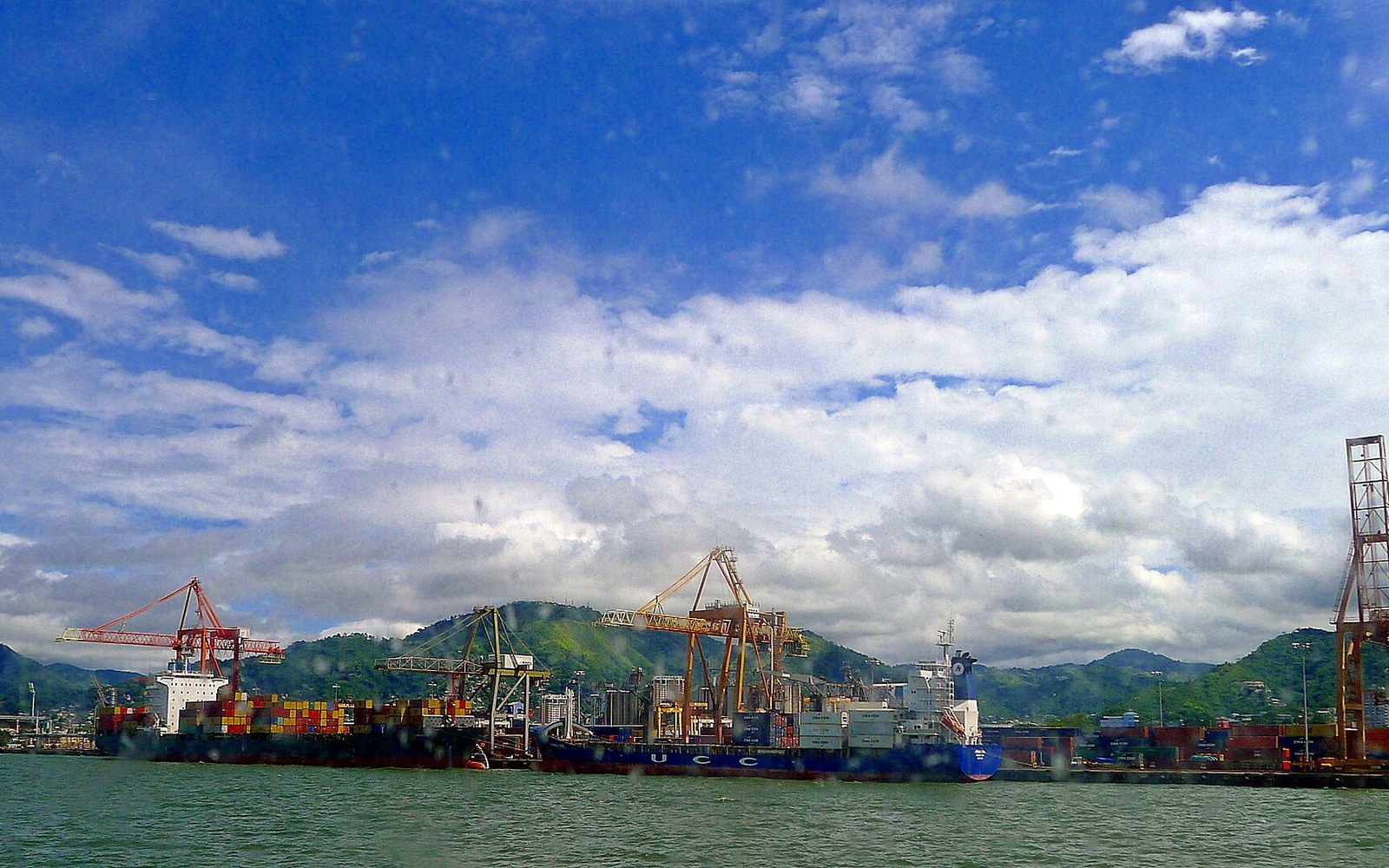
An economy built on hydrocarbons — Trinidad and Tobago's economy runs on natural gas and petrochemicals, which makes it structurally unlike every island north of it.
Point Lisas Port - Trinidad and Tobago, West Indies · Wikimedia Commons
The name La Brea is simply Spanish for "the pitch," applied when Spanish colonisers in the sixteenth century encountered the lake and registered its practical utility. Sir Walter Raleigh visited in 1595 and had his ships caulked with the material — a detail recorded in his own account of the voyage to Guiana and one of the earliest documented examples of industrial use of natural bitumen in the Western Hemisphere. Indigenous Trinidadians had used the pitch before any European arrival; the lake predates every account of it.
The Mechanics of Continuous Mining
What makes Pitch Lake geologically striking is its apparent self-renewal. Material extracted from the surface is gradually replaced as fresh bitumen migrates upward, a process that has sustained commercial mining for well over a century without visibly exhausting the deposit. The lake's surface is not uniform: the centre remains soft and mobile, a dark viscous mass that slowly circulates, while the margins solidify enough to walk on. Geological surveys have confirmed the circulation is real, driven by the pressure differential between the subsurface reservoir and the surface expression.
Commercial extraction began in earnest in the 1860s under the auspices of American businessman Randolph Rust, who obtained a concession from the colonial government. The pitch was found to be excellent for road paving — harder-wearing than much of what Europe was then using — and export volumes grew quickly. By the early twentieth century, Trinidadian lake asphalt had been used to pave streets in New York, London and other major cities. The state-owned Lake Asphalt of Trinidad and Tobago now manages extraction, supplying material that is still used in road construction internationally, valued in part because natural lake asphalt contains trace elements and a mineral composition that synthetic alternatives do not fully replicate.
Trinidad as an Outlier
Pitch Lake underlines the degree to which Trinidad's economy is shaped by hydrocarbon geology in ways that have no parallel in the rest of the Caribbean. Most island economies of the region were built on agriculture — the plantation system, sugar, then bananas — and have since reoriented toward tourism and services. Trinidad followed a different trajectory because it sits on a different kind of geology: a continental fragment with sedimentary basins, source rocks and a petroleum system, rather than the young volcanic or carbonate terrain that characterises most of the Lesser Antilles. La Brea is the surface made legible — geology you can see, touch and mine without drilling.
The lake has also yielded palaeontological finds of real scientific value. Animal remains including prehistoric giant sloths and other Pleistocene fauna have been recovered from the pitch, preserved much as specimens are preserved in the better-known La Brea tar pits of Los Angeles — a geological coincidence that extends even to the shared name. Both deposits are surface seeps of similar origin; both have acted as natural traps for organisms over millennia.
Pitch Lake is, in the end, a place where the deep structure of the Caribbean's most geologically anomalous island becomes plainly visible at the surface, and has been doing so since before anyone thought to write it down.