| Q Wealth Report
OFFSHORE BANKING IN THE CARIBBEAN: FREQUENTLY ASKED QUESTIONS | Q Wealth offers you exclusive, reliable, up-to-date information on Financial Freedom, Asset Protection, and Private Banking
We invite you to explore this site to discover how to Bank Offshore, Protect and Create Wealth Internationally, Invest Globally for Success, Obtain a Second Passport, and Become a Sovereign Individual.
What is Q Wealth? Q Wealth is a unique private service for free + thinking + individuals. It is for people who want to break free and create a better, wealthier life. It is for present and future millionaires. There are various levels of membership you can benefit from:
You can sign up free to our Q Bytes newsletter and the Q Wealth blog delivered by RSS or email, two separate products that are completely free. They let you study our outline ideas and keep in touch. Get started today. CLAIM YOUR OFFSHORE WEALTH CRASH PROFITS COURSE Offshore Banking & Asset Protection FREE 5 day online course + Q Bytes
You can become a Full Q Wealth Member for just $87 per year.. You will gain instant access to our Members Section and a Wealth of Information, Contacts and Research. You will have direct access to our Q Wealth Experts and other Rolodex contacts.
Finally you will receive the weighty, serious information we don't give away for free: The Q Wealth Report, our flagship quarterly newsletter full of unique and exclusive ideas and solutions you can use to your advantage right away. You can attend Q Wealth Events, high level private retreats where like minds meet, do business and create wealth.
Only after you are convinced that Q Wealth services are really helping you create wealth beyond your expectations, you can upgrade to VIP membership, opening up valuable benefits and our highest level of personal service.
Here's What you Will Learn in Our Free 5 Part Online Course 'Secrets of the Super Rich'
So you can test our services and see we really deliver what we promise, we offer you right now the unique chance to receive our free Secrets of the Super Rich course delivered in your inbox over five days. You can read each module in 10 or 20 minutes so it will not take much time out of your busy day. You can sign up right now by entering your e-mail address in the box.
You will also receive a free subscription to our newsletter Q Bytes published as needed but approximately once a month.
In this course you will learn:
Day 1: Offshore Banking Made Simple - Internationally-acclaimed offshore banking expert Peter Macfarlane busts through the offshore maze in simple terms. You will learn how and when to open an offshore bank account so it remains private, secure and confidential. Who can you trust? And who can you not trust?
This module includes special notes for USA and European Union citizens who must take very special precautions when opening offshore bank accounts. You'll learn the mistakes you cannot afford to make, and do it right first time.
Day 2: Introduction to Offshore Asset Protection and Estate Planning - Have you been procrastinating in making plans to legally protect your assets from governments, plaintiffs etc? You know you need to do something but are not quite sure where to start?
This module is for you, and covers international asset protection, estate planning, trusts etc. After reading this the next steps you need to take to protect yourself and your family will become clearer to you.
Day 3: Health, Wealth and Wisdom - Health always comes first. Wealth without health is nothing. In this module you will discover how health, wealth and wisdom are so closely interlinked in ways you may never have thought of. Ways that you can harness immediately to build wealth. The ideas outlined in this module will make the poor rich, and the rich even richer! Most of all, making money, onshore or offshore, is about having fun. Learn how and why to have fun while making money!
Day 4: How to Build Wealth Online and Offshore - These days offshore is not just about hiding money or financial privacy. Q Wealth expert Thomas Bolther explains how you can start with no money down and create completely new wealth.
You can run a serious business from your laptop anywhere in the world. You can roam the globe electronically, literally making money while you sleep! Thomas will tell you how to get started in easy steps.
Day 5: The Coming Shift in Power and How to Profit from it! - In this final and forward looking module of the course, Dr Richard Cawte outline some strategies to prosper from the amazing power shift going on right now.
Some of the greatest fortunes of the 20th century were made in the years following the depression of the 1930s. Some of the greatest fortunes of the 21st century will be made in 2011-2012.
Will you be on the sidelines worrying about your next mortgage payment? Or will you be right in there taking full advantage of the opportunities? Richard suggests here some concrete steps you can take now to get ahead. Just one of these ideas could make you thousands or even millions of dollars!
As you can see we have crammed an extreme amount of information into this intensive five part course. If it's so good, why are we offering it for free? Simply because we believe you need a chance to check us out before parting with your hard-earned money.
If you like the material in this course, we believe you will sign up for our full membership option that will allow you access to exclusive, never-before-published information designed to increase your personal and financial freedom, your wealth, and your privacy at an international level.
Sign up today to receive your free Secrets of the Super Rich course. By signing up you have nothing to lose. But if you don't sign up, every day's delay could be losing you potential extra earnings. Q Wealth Report is a privately published newsletter, established in 1996, covering matters of freedom, wealth, and security. Its aim is to help readers not just protect wealth offshore, but also to see it grow.
They offer readers a free weekly newsletter dedicated to freedom, wealth and privacy, as well as the flagship quarterly newsletter and a number of exclusive research reports, regularly updated. Amongst these is the Practical Offshore Banking Guide edited by Peter Macfarlane.
Contact Information Q WEALTH LIMITED Suite 404 Albany House 324-326 Regent Street London W1B 3HH United Kingdom
Phone +44 20 3384 1993 UK
Please mail orders and subscriptions to:
Q Wealth Limited SwissPost N-56489 Zurcherstrasse 161 CH-8010 Zurich Switzerland info@qwealthreport.com
| Private banking in the Caribbean has developed almost beyond recognition from the early days. Suitcases full of cash being flown around tropical islands in small planes are now only found in the movies!
Offshore banks in the Caribbean now comply almost universally with tough international due diligence and KYC standards. In terms of services, security and stability, they compete very favorably with more traditional banking havens.
Services offered typically include online/internet banking, multi-currency accounts, offshore credit and debit cards with or without names printed on them, online brokerage accounts with access to exchanges around the world, around the clock… and even investments in physical precious metals like gold and silver.
Should you be looking at banking offshore for asset protection and privacy? I prepared the following FAQ about Caribbean offshore banks on behalf of Caribpro, to help you answer that very question.
What is Offshore Banking? An offshore bank account is simply an account you open at bank outside your country of residence. For the bank, it is account held by someone who is non-resident in their country. In contrast, a bank in your country of residence would be referred as a domestic bank.
Isn’t Offshore Banking Illegal? No. This is a myth, perpetuated by the media and some governments. Some people, myself included, would argue that the governments want to frighten people to keep their money in the country, where the government can control it more easily.
The truth is that opening an offshore bank account is completely legal in most of the world, including USA, Canada, Western Europe, Australia etc. Only a few countries with very strict capital controls (like North Korea) legally prohibit their citizens from holding offshore bank accounts.
What is of course illegal is evading your tax obligations, or failure to comply with reporting requirements established by law. Unlike with a domestic bank account, an offshore bank will not normally report anything to anybody, so the burden of reporting shifts to you. It’s therefore very important to have a good understanding of the way these rules might apply to you, either through reading and research, or through taking professional advice.
Do I need to be super-rich to bank offshore? No, this is another myth. Of course for banks the cost of servicing accounts held by non-residents is usually higher. For this type of account, compared to domestic accounts, they need better qualified staff who get paid more and must frequently travel, make international calls etc. They also frequently need to hire international lawyers and compliance officers. So, most private banks do aim their services at wealthy individuals, and in terms of the fees charged for things like credit cards or wire transfers, the fees are usually higher than domestic banks. If you invest more you will certainly get a more personalized service. But there are also offshore banks that are more than happy to cater to those with as little as a few hundred dollars to deposit. I would say that anyone who has a little nest-egg built up for their retirement should consider some kind of offshore diversification. Specific recommended banks, with their contact details, are listed in my Practical Offshore Banking Guide, available free to members of Q Wealth Report.
Why do people bank offshore today? Despite the propaganda, I find most people going offshore today are usually not very concerned about taxes. They are usually looking to diversify globally and invest money on which they have already paid taxes, or tax-free money such as IRAs and other retirement accounts.
Most clients I refer to offshore banks are looking for geographical diversification. For example, they see the constant ‘stealth devaluation’ of the dollar, the pound and the euro, and would like to increase their international investing exposure. Or, they are concerned about being sued in today’s crazy legal system that awards multi-million-dollar judgments for minor errors, and they want to put as many legal roadblocks as possible in place to make their assets less of a target.
We also deal with people, young and old alike, from all over the world who are setting up small businesses in areas like e-commerce that don’t rely on a bricks and mortar establishment in one place. These businesses can often benefit from the expertise and services of the offshore banks in the Caribbean and beyond.
Are offshore banks safe? Generally speaking, yes. Most offshore and private banks around the world are very well run and conservatively managed. They do not have investment banking divisions. They stick to traditional banking services that are possibly less profitable, but much less risky. The vast majority of the banks that have gone out of business or needed bailing out in the last few years were in the USA and Western European countries, with the notable exception of Switzerland where no bank has ever gone bankrupt in their entire history.
Of course, there are a few offshore banking scams around, and as with any other financial transaction, it’s important to exercise due diligence and caution. Further details of how to do this are available in my Practical Offshore Banking Guide.
What is the best country to open an offshore bank account? There is no one-size-fits-all answer to this. It depends on things like your country of residence and citizenship, and also the purpose for which you need the account. Sometimes the actual bank you choose is really more important than the country, since the bigger banks have offices in many countries and can refer you to the one that best suits your needs.
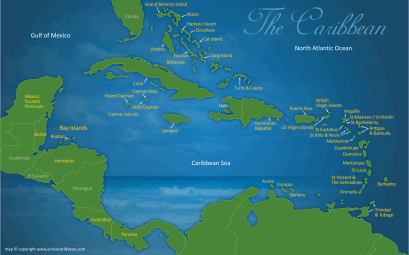
There are however some offshore banking jurisdictions that have specialties. For example, Cayman is good for mutual funds, Nevis is good for Americans seeking asset protection, Panama is good for Latin Americans because of the language, the British Virgin Islands and St Lucia have strong connections in Asia, etc.
Do I have to travel to open an offshore account? Not necessarily. The majority of banks do want to meet their clients in person, and most clients like to see the bank they are entrusting with their money. But some banks do allow for accounts to be opened by mail. Normally you will have to send certain documents, such as a bank reference letter and a notarized copy of your passport. Then they might follow up with a short interview by telephone or video-conferencing. Some private bankers also spend a lot of time on the road visiting clients.
Can US citizens open offshore accounts? Yes, but it is more difficult for Americans. Because of the restrictions imposed by the US government, such as the HIRE Act and FATCA, many of the best offshore banks are now refusing to deal with Americans. It’s nothing personal, just that the cost of dealing with all the US regulations now makes it uneconomic to do business with Americans.
However, with the current crisis more Americans than ever before are recognizing the need to invest globally, so there is also a big market waiting for banks there. There are still a number of foreign banks that will open accounts for US citizens and residents. Some of them are listed in my Practical Offshore Banking Guide, mentioned above.
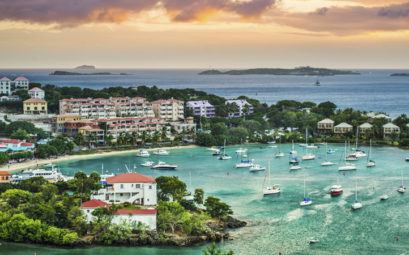
What about Caribbean Offshore Banks in the global context? The Caribbean is particularly convenient for people from the USA and Canada, due to its proximity. This is part of its traditional appeal. Clients can fly in for a Friday meeting at the bank, spend the weekend on the beach or golf course, and be back in the office on Monday.
However, private banking is very much a global business these days and many clients are extremely mobile. Innovations like internet banking and international credit and debit cards mean that proximity is no longer so important. Many Americans are banking in the Far East, while Asian clients are choosing to open bank accounts in the Caribbean.
At the end of the day to choice is down to you. You need to find a bank and a banker you are comfortable doing business with, whether you are looking for a simple internet banking service with a debit card for receiving and accessing international wire transfers, or a long term, complex relationship of trust to look after your family finances for generations to come.
|
| |
|